
Home
Coreopsis is Easy to Grow and is a Pollinator Fan Favorite
by Charlotte Kidd, for the Shuttle
June 11, 2026
Coreopsis (kor-e-op-sis) should be in every perennial and vegetable gardener’s vocabulary and garden, IMHO. Tickseed is this daisylike flower’s common name, referring to its small, dark seeds.
In the Victorian language of flowers, though, coreopsis represents cheerfulness, sunshine, joy.
Coreopsis is closer to the “native” species that grow better in the northeastern United States than the fancy, highly hybridized cultivars developed in sandy-soiled Netherlands nurseries. The coddled, specialized hybrids grab our gaze with their multicolored flowers, but they can be short-lived here. Their foliage succumbs to mildew or their roots rot in our winter-moist, clay soil.
So back to our tried and true natives.
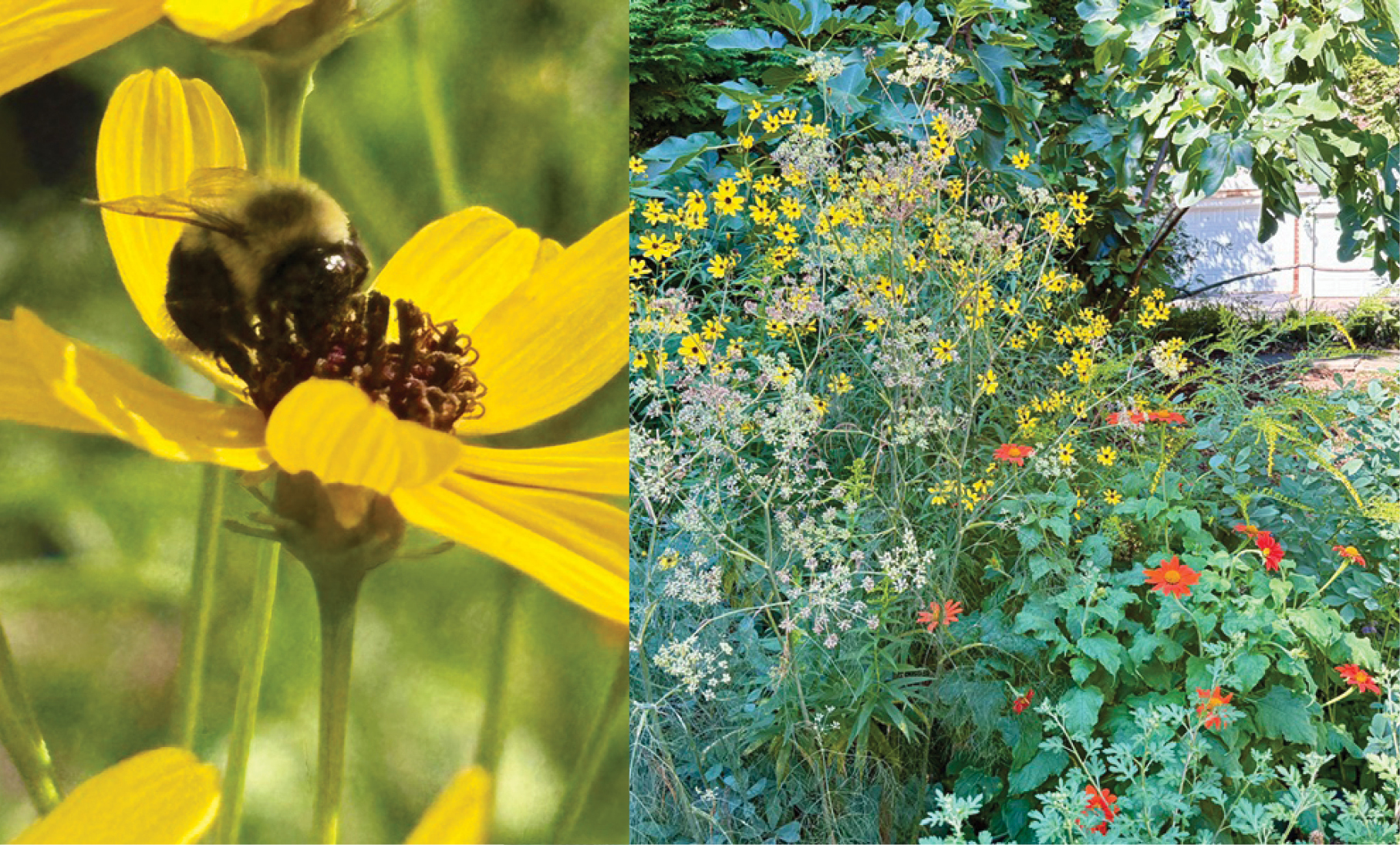
My favorite tickseed is Coreopsis tripteris ‘Gold Standard’ that came into my life as a gift plant from the Mt. Cuba Center in Hockessin, DE. I have been dividing and sharing this tall sun lover ever since. It’s drought-tolerant, a months-long bloomer and loved by pollinators. Sun-loving here means at least six to eight hours of direct sunlight. Well-drained soil is crucial.
In its 2012-2014 trials, Mt. Cuba found Coreopsis tripteris ‘Gold Standard’ outstanding, one of two top recommendations.
Coreopsis tripteris ‘Gold Standard’ combines all of the great attributes of the straight species, like excellent hardiness and disease resistance with a smaller and sturdier habit. Although still a large plant just under 6 feet tall, ‘Gold Standard’ has strong stems that never flop.
—From Mt. Cuba Center’s 2015 trial notes summary
Gold Standard’s many bright yellow flowers with dark cones can appear like fluttery butterflies — light and airy, though en masse. Removing the dead flowers will prolong plant bloom. Two techniques: Clipping each flower off individually, or shearing off a section. Usually I start by removing each dead flower, which is tedious. Eventually, I shift to shortening several stems with the most dead flowers.
This rhizomatous perennial spreads about two feet over three years, and is never fussy. It’s easy to divide by year two. You can extend the bloom time by staggering the stem height.
I like to have several stands in a large garden, shortening each group of stems differently for varying bloom times.With one cluster in a small garden, I’ll leave several stems tall, shorten a third by about 18 inches, and another third by a foot.
Besides its ease of growth, ’Gold Standard’ is known in Mt. Cuba as a “fantastic pollinator plant,” writes Melissa Starkey of the Mt.Cuba staff. “We have seen everything from bumblebees to swallowtail butterflies on the blooms, which are produced for months. The seeds are a gold finch favorite.”
Starkey continues, “The pollinator study done by Owen Cass in the coreopsis trial showed that the majority of pollinators are bumblebees, with smaller portions of dark and green sweat bees observed. Some wasps and hover flies were also counted.”
Local Color
In April in our West Mt. Airy neighborhood, gardener Andy Croft spied a sweat bee on the dead brown stock of a coreopsis ‘Gold Standard’. Late last fall, he clipped post-bloom stems back to about 12” to 16” high, for winter use by insects.The thoughtful effort was successful. Voila! Come spring, a living sweat bee was atop one stem he’d shortened. Croft said the tiny bee had nested inside the dead stalk, making chambers for its eggs.