Home
Henry Got Crops Makes More Room for Native Perennials
by L. Gnadinger, Weavers Way Membership and Sustainability Coordinator
August 6, 2026
by L. Gnadinger, Weavers Way Member and Sustainability Coordinator
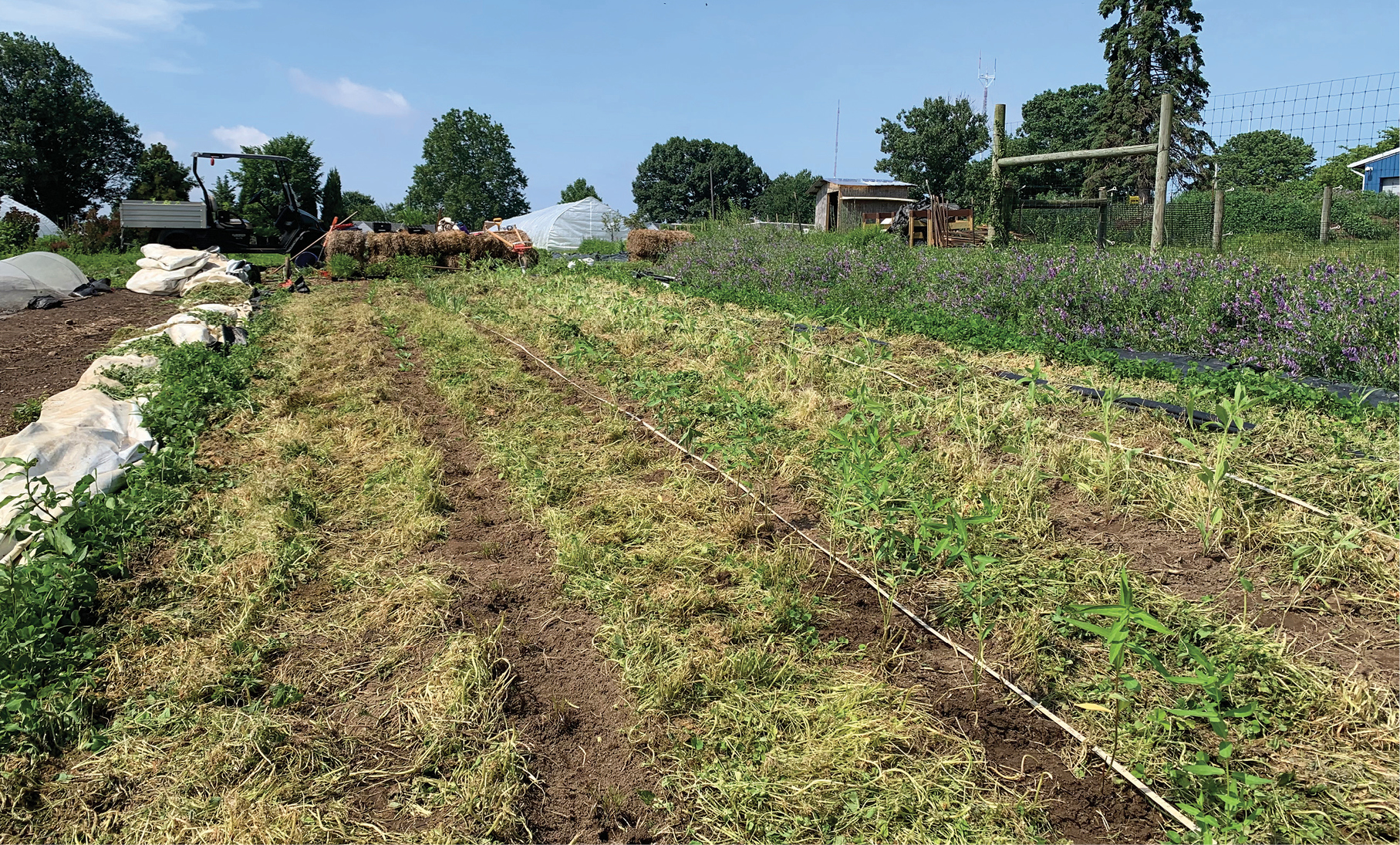
On Jun. 12, the team at Henry Got Crops Farm planted a new section of beds dedicated to native perennials, totaling around 1,200 square feet. This is in addition to an existing 4,000 square feet of mixed species perennial beds that also includes large native plantings.
The newest bed was made possible through a grant of 500 perennials from the Xerxes Society for Invertebrate Conservation, which the staff secured for the second year in a row.
Alé Lomanto, You-Pick manager and floral coordinator for Henry Got Crops, secured the support from Xerxes this year. His relationship with native species on the farm comes from
a desire to protect its wild spaces and restore balance within the larger ecosystem.
“Historically, most of modern-day agriculture has been at odds with the natural world through expansion into wild spaces, the use of tillage, introducing non-native opportunistic plants, the introduction of pesticides and fertilizers, and high tap water usage leading to salt accumulation in soils — the list goes on,” he said. “One of my many goals on the farm is to leave it feeling more supported and balanced from when I got there, and this feels like one of the ways to honor that.”
Beyond agricultural spaces, non-native plant species make up most of the flora you find on any piece of developed land or designed outdoor space in the United States. But through conservation work and movements like entomologist and University of Delaware Professor Doug Tallamy’s Homegrown National Park (which raises awareness and encourages adding native plants to the landscape), this is slowly beginning to change.
In addition to being water- and resource-intensive and occasionally invasive, non-native species do not meaningfully support our ecosystem’s food web at its foundation. Tens of thousands of native invertebrate species have specialized relationships with our native plants.
When insects and arthropods cannot eat or find shelter, their numbers decrease. As a result, the many larger species that rely on them directly for food or indirectly for other ecosystem services they provide (including us) also suffer. This pattern repeats, ultimately leading many to call the time we are living in the Sixth Mass Extinction Event.
That’s a genuinely scary reality to sit with. But for better or worse, the future is never certain. While there is time remaining to practice responsible land stewardship together, it’simportant to celebrate those wins at any scale.
Our farm teams work hard to grow vegetables for our stores and CSA shares. When they still somehow find time to plant native perennials, care for the health of the soil and look after the many species that call our farms home, I am filled with joy and hope. The same goes for every time the farm stand sells a goldenrod, a cooperator earns hours in the garden behind the Chestnut Hill store, or our many amazing gardener-neighbors in My. Airy outdo themselves. Thank you all.