
Home
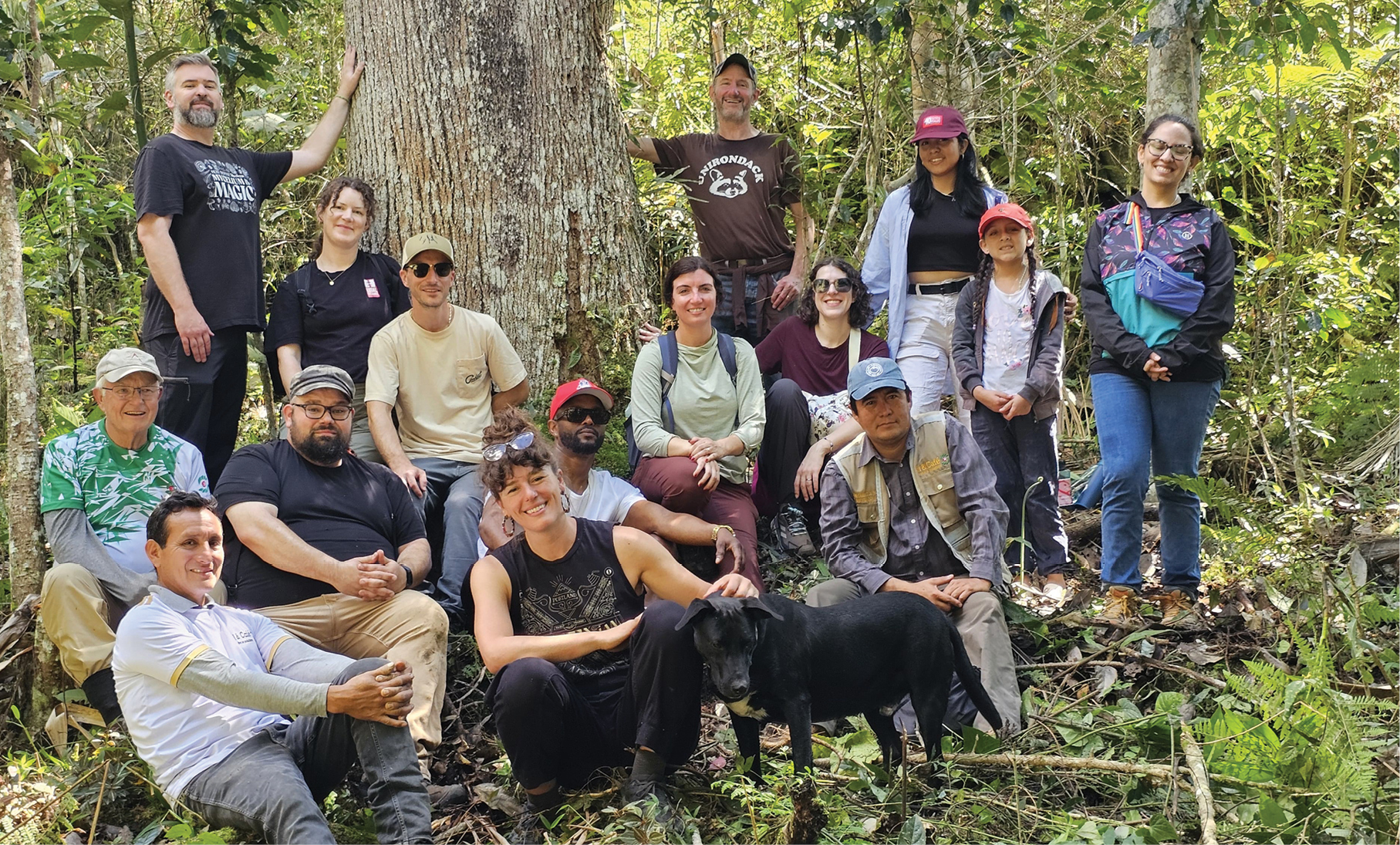
Following the Coffee Production Trail in Peru
By Virginia Herbaugh Souder, Weavers Way Merchandising Coordinator
September 4, 2026
by Virginia Herbaugh Souder, Weavers Way Merchandising Coordinator
After 12 and a half hours, our group of Equal Exchange and grocery co-op employees landed in Piura, Peru, a city on the country’s northern coast, where approximately 3,000 tons of coffee are exported each year. For the coffee grown in this region, it’s near the end of its journey. But our group has only begun.
After a warm welcome by our hosts, the Sol y Cafe Cooperativa de Productores, a large producer cooperative in Peru, we piled into the shuttle van with treats and coffee, traveling the same road as the beans that are being exported. The traffic shifted from four makeshift lanes in both directions to one long stretch of country road, as the landscape changed from arid desert to mountains covered in clouds. Eight hours later, we finally arrived in the high jungle of Jaén. For us, it was a long, exciting day. For those who regularly work this route, it’s a grueling journey.
Jaén is a bustling city this time of year. We arrived during harvest season amid countless farmers from all around the Cajamarca region who were there to finish drying their crop before selling it. Their tarps, covered in Arabica beans drying in the sun, line the roads into and out of the city.
Sol y Cafe’s warehouse and offices are similar. Next to the parked motorcycles of staff members lay a smaller tarp lined with beans. On the warehouse side, a large truck full of ready beans in large black bags waited to be unloaded. Inside, they will be weighed, tagged, and sampled.
We formed a semi-circle around a large scale, watching small, nimble men pile bags, each weighing about 170 pounds, onto the scale with relative ease. After the harvest is weighed and tagged, the sample is taken and inspected at a station on the opposite end. Here we watched a worker sort the beans with expert speed, judging their appearance. If the coffee looks good, it receives a higher score; if not, Sol y Cafe works with the farmer to identify and improve future harvests. As for the beans, they’ll be used in either a lower-grade coffee or exported to Canada for skin care. Nothing is wasted.
The Dance of Cooperation
We next stopped at one of the farm cooperatives, a longtime member of Sol y Cafe. But first, we visited their member facilities 30 minutes outside Jaén. Here, farmer members can finish drying their crop before going to the offices in Jaén. The process can take up to three days, depending on the weather, and many farmers travel a long distance.
With this in mind, the cooperative built a hotel and restaurant for members who need to stay in the area, which allows them to get much-needed rest. In addition, the facility has a school for their children. While we visited, the students took lessons in math, gardening, reading and dance. We were told the philosophy is that “dancing is the first expression of cooperation.” We were fortunate to witness this philosophy in action.
At the end of this tour, we watched the students board charter buses and we climbed into cars. They traveled home while we rocked along twisting mountain roads. Three hours later, we arrived at our host family in the Santa Rosa area, surrounded by forests and cliffs, with a sky full of stars.
After a delicious breakfast, made complete by coffee grown on host Gerardo Goicochea’s land, we followed him to the plots for harvest. He’s been growing coffee for 30 years, and as we walked to mature trees dotted with red and green beans, buckets strapped across our shoulders, it became clear this is more than work for him—it’s his passion.
We were instructed to pick the ripe beans, which have a rich red shade and come off with an easy twist. Our group worked slowly, hoping to do a good job. After we filled our buckets, they were combined into large bags and emptied into a tray back in town. There we learned about the sorting process and our yield. From the 11 of us, we managed to harvest about 50 kilos. On a usual harvest day, each worker alone picks that amount.
Fortunately, we didn’t get sent back to the fields but instead learned the sorting process. First, we removed underripe beans, then overripe ones, and put them into separate containers. No bean is thrown away — that would be like throwing away money. All the beans have value. As we sorted, Gerardo explained the next steps: removing parchment, or the shell of the fruit, like picking the pit from a cherry. The beans then ferment for four days.
The process from harvest to export can take from eight to 15 days. But to get to harvest, a coffee tree must first grow. At Gerardo’s farm, they begin as a sprout, carefully grown in a nursery. During our visit, we planted baby coffee trees three months old, handling them with the utmost care. Their roots are contained in plastic, which we cut away before planting them carefully in a mixture of dirt, guano, and fertilizer.
Our trees were planted in grades down the mountain side, their bright green leaves shining on an overcast day. For our group, this was a humbling experience: The trees planted will be ripe for harvest in two years. If we didn’t do this well, the future of the family would be jeopardized. As I tucked in my little plant, I whispered to it, “Please grow big and fruitful.”