
Home
If You Plant It, They Will Come: My Final Eco Tip
by Marsha Low, Weavers Way Environment Committee
September 4, 2026
by Marsha Low, Weavers Way Environment Committee
It’s been quite a run! I’ve been writing Eco Tips for the Shuttle for over 15 years, and I’ve been on the Environment Committee longer than some of you have been on the planet. Now that we’ve got some new (and younger!) members, I’m leaving the committee, so this will be my swan song.
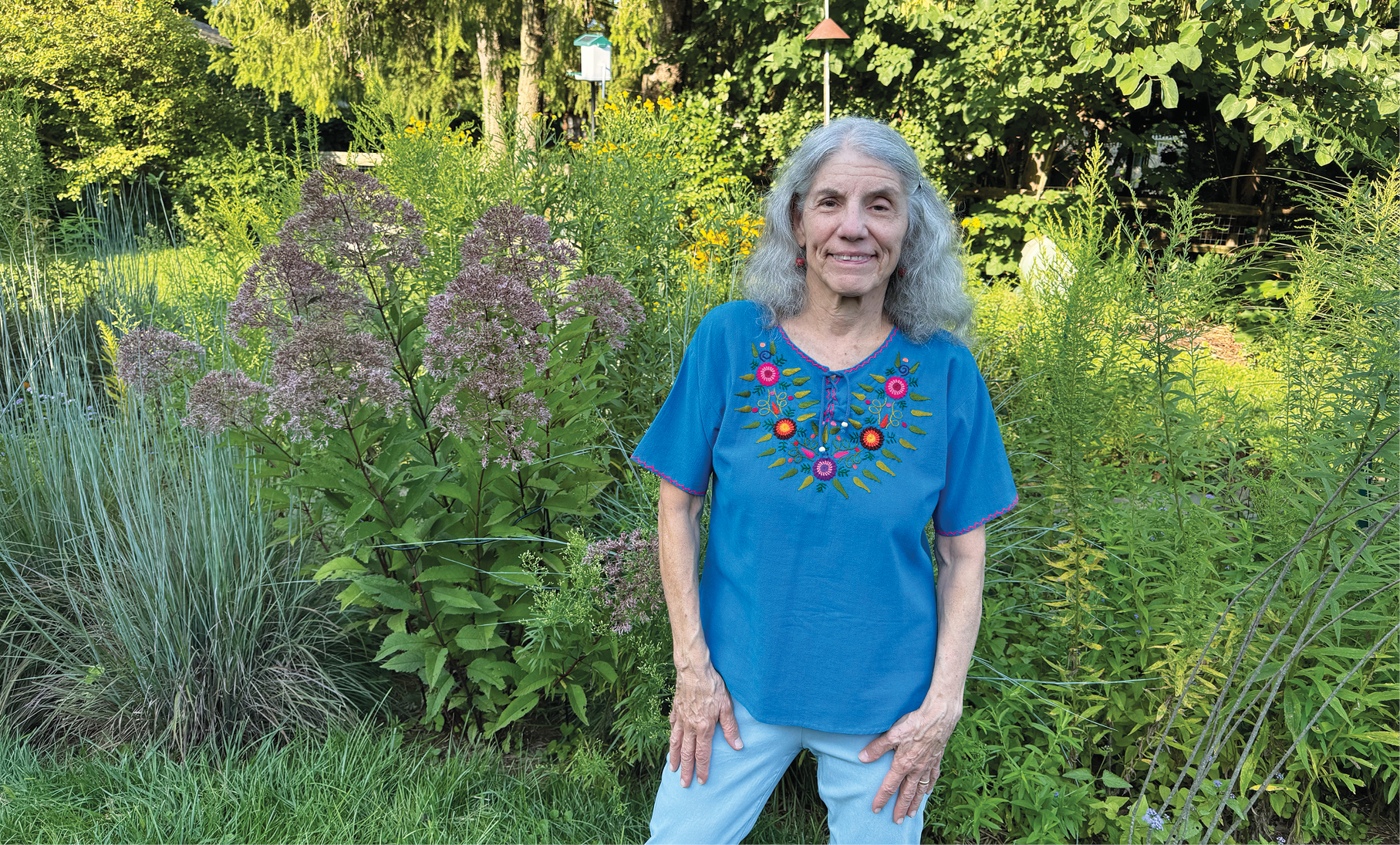
Going forward, I’ll be putting more time into music, especially writing and performing songs of resistance and activism that meet this dire moment in our country’s history. I’ll also be working in my pollinator and vegetable gardens with my husband, David.
Over the years, I’ve enjoyed exploring and writing about ways Shuttle readers can make their lives more sustainable and environmentally friendly. In recent tips, I focused on what we can do to convert our backyards and other outdoor spaces into places that support pollinators, birds and other wildlife. It may be the most important thing we can do in the face of steep declines in populations of insects, birds and other species. Climate change, a major driver of these declines, along with habitat loss and the use of pesticides, including insecticides and herbicides), is a part of a problem so huge that we could easily throw up our hands and say there’s nothing we can do.
But we can help struggling pollinators and birds by converting our yards into spaces that support them. If you have a lawn, consider removing at least part of the turf and planting native perennial flowers that support pollinators and birds, including bee balm, milkweed, coneflower, Joe-Pye weed, goldenrod and New England aster. You can also add shrubs or small trees such as serviceberry and winterberry holly.
Life is Better With Native Plants
Once established, these perennial plants require little work to maintain. Even if you only have a patio, you can plant native flowers in large pots. If you have enough space, you can also plant a veggie garden, and the presence of pollinators will benefit your squash, cucumbers and other crops. Once you’ve established your garden, try to get neighbors on board to create a corridor of habitat gardens that will help pollinators and birds. That will accomplish more than one isolated garden in the middle of properties with lawns that are too often treated with pesticides.
Unfortunately, many homeowners in this country are obsessed with having what they consider a perfect, weed-free lawn. That obsession, one that requires the use of herbicides and insecticides, is the result of years of marketing by pesticide companies. Since about 99% of synthetic pesticides are derived from petroleum, natural gas and coal, according to multiple sources, it’s not surprising that fossil fuel companies play major roles in developing pesticide ingredients and profiting from their use. Through aggressive advertising, pesticide companies have convinced many of us that dandelions, violets and clover are weeds that should be eradicated. Yet, these plants are food sources and hosts that pollinators depend on early in spring before many other flowers bloom.
In addition, many homeowners buy and apply mulch to their flower beds in the spring to suppress those early- blooming plants that pollinators need. In the fall, instead of allowing fallen leaves to remain in their flower beds or gently raking them to an area of their garden, they pay landscapers to use highly polluting and noisy leaf blowers to remove them. In doing so, they also remove beneficial insect larvae that depend on fallen leaf cover to survive the winter and emerge the following spring.
Those fall leaves make great free mulch after the critters have emerged, but we have been programmed to think of them as “litter.” Then we look around our gardens, scratch our heads, and wonder where all the butterflies and bees have gone.
All of this is a huge con. We spend countless hours applying pesticides and mowing lawns (monocultures that don’t support anything living except the grass itself). We spend money or our time removing leaves from our properties every fall and forking out more money to buy mulch in spring. We fight nature instead of working with it.
In my tips, I’ve often written about “win-win” situations. Having a pollinator and bird-friendly garden is one of those. First, you’ll be helping pollinators and birds survive and perhaps even thrive. Nature, with a bit of help, is resilient. Second, once the initial installation work is done, you’ll save time by no longer having to mow your lawn or pull up those native plants you once considered weeds. Third, no longer paying to have your leaves removed, purchasing mulch and paying to have it spread around your plants means you’ll save money — or time, if you previously did those tasks yourself. Instead, you’ll be able to enjoy your beautiful garden with your family and friends, along with bees, butterflies and birds. Yes, if you plant it, they will come!