
Home
Mayfly Project Introduces Kids to a New Skill
by Chris Nosal, for the Shuttle
May 7, 2026
There are easier ways to spend a cold Saturday in March than standing beside a creek at dawn, stringing fly rods and explaining knots to middle school students who’ve never done this before. But I can’t think of many better ones.
I serve as a mentor with The Mayfly Project’s first Philadelphia chapter. During four outings this spring, I had the privilege of working with a small group of young men from the city’s foster care system. They showed up ready to try something new with a group of adults they’d never met. Their caregivers showed up too, giving up early mornings so the kids could have a new experience and, hopefully, a lasting memory.
The Mayfly Project, founded in 2015, introduces children in foster care to fly fishing as a way to build confidence, connection and a sense of calm. Each child gets their own gear and learns skills like casting, knot tying and reading water. Just as important, they gain an activity they can return to that encourages patience, focus and spending time outdoors.
This year marks the program’s first season in Philadelphia along the Wissahickon Creek. It’s the perfect classroom — in the city but far enough removed to feel like a different world.
On Mar. 21, we couldn’t fish yet, but that didn’t slow us down. We talked about insects, practiced knots and helped the kids assemble their rods. Two experienced mentors, who also run a one-day program at Norristown Farm Park called All Kids Fish, set up a casting area with Velcro “flies” and laminated fish to aim at. What could have been a simple drill turned into a game, and the boys were all in.
One of them, I’ll call him S., was especially so. He talked about wanting to design video games someday, and you could see that mindset in how he approached casting; he was trying to “beat” the challenge and land every target. Before long, all three boys were beaming and holding up their practice catches for photos.
Wading into the Water
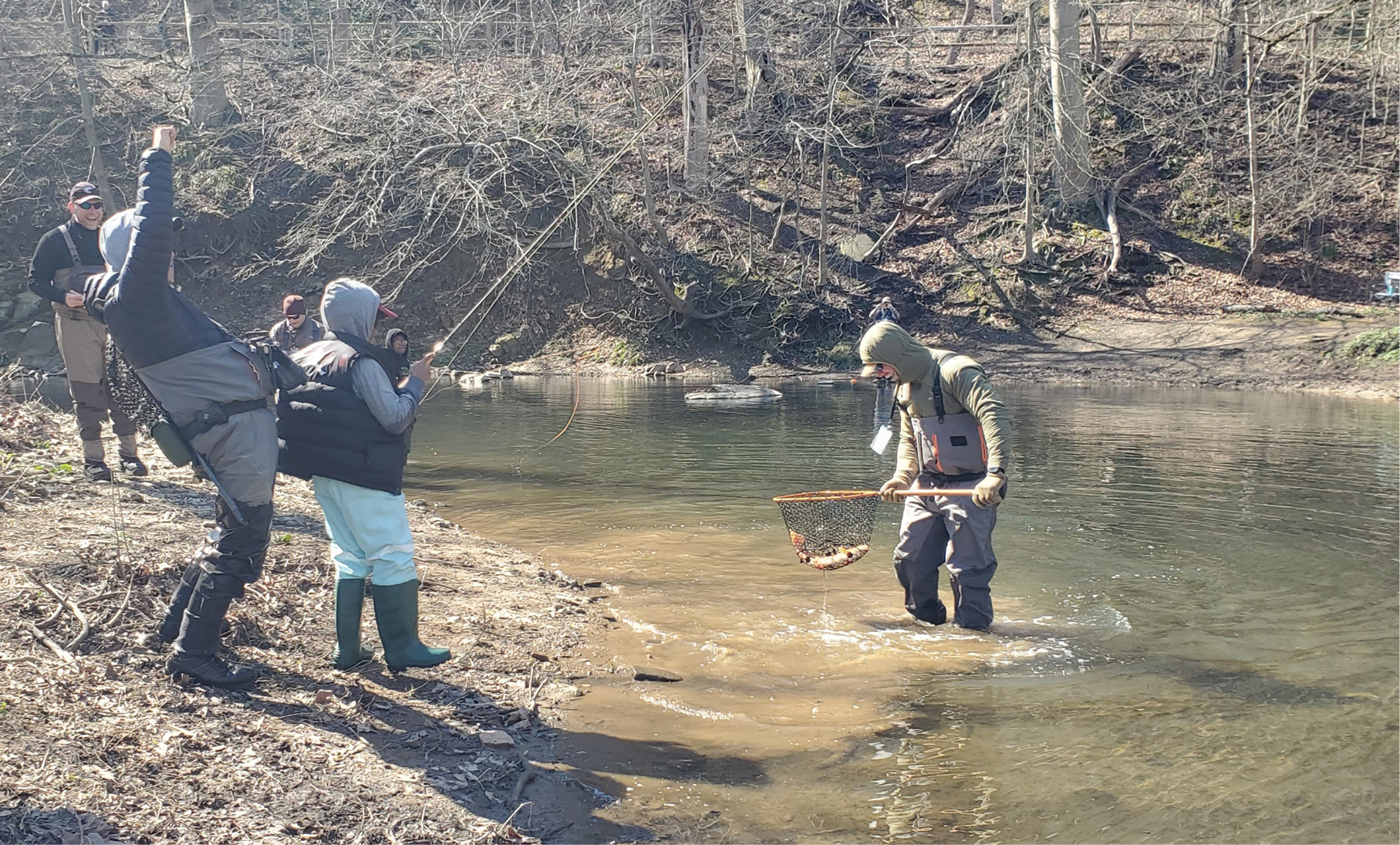
A week later, we met again on the banks of the Wissahickon, waders on and rods rigged. It was a cold morning, but the boys didn’t hesitate. There’s something about stepping into a creek for the first time that can change you. The city noise falls away, and what matters becomes simple: the current, the line, the next cast.
A strong group of mentors from the local fly fishing community gave the group constant encouragement. Every time an indicator moved, there were shouts to set the hook. Every fish was celebrated. Cameras came out and for a few hours, the energy on the water was hard to match.
One of the boys I worked closely with — I’ll call him “K.” — needed a little extra effort to get geared up. Finding waders to fit his tall frame turned into a small team project, but we made it work. Once he stepped into the creek, I asked how it felt.
“I feel powerful,” he said.
That moment stuck with me. It was simple and honest, and it captured something essential about the experience. For all of them, this wasn’t just about fishing; it was about trying something new and feeling capable.
The fishing itself delivered. S landed a standout fish, drawing cheers from everyone nearby, and each of the boys brought in fish of their own. Of course, some of the casting lessons went out the window with the excitement, but they were learning by doing, and that’s what counts. Each subsequent week stressed more self-reliance, along with reinforcement.
Programs like All Kids Fish share a similar goal. This one-day event introduces kids to fly fishing by providing equipment, instruction and access to local waters. Like the Mayfly Project, the focus isn’t just on catching fish. It’s about creating an opportunity to step outside, try something different and experience a sense of belonging.
Access matters; not every kid grows up with easy entry into outdoor activities like this. Sometimes all it takes is an invitation, the right support and a place to start.
The Mayfly Project is intentional in how it provides that. Mentors are trained and vetted. Partnerships with local organizations help support the kids, and each participant leaves with the gear and knowledge to continue fishing if they choose.
After each Saturday morning, I was more tired than I expected — not in a bad way, just the kind of fatigue that comes when an introvert is being fully present. Instead of fishing myself, I slept in most Sundays, still replaying meaningful moments from the day before.
It’s unlikely we’re creating lifelong fly fishers. Maybe one or two will stick with it. Maybe none will. But if they take away a memory of being outside, supported and successful at something new, then that’s enough. I don’t always fish for the fish.
If you want to get involved, go to themayflyproject.com or ifishibelong.org.
Chris Nosal is a member of Weavers Way Co-op.